Back
Selected IHR Author Biographies
Harry Elmer Barnes
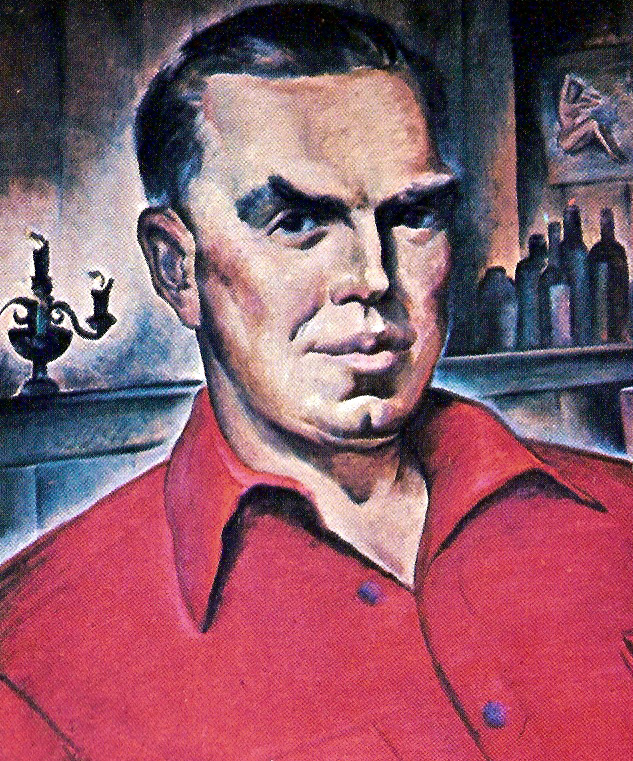
Harry Elmer Barnes (1889-1968) was one of the most prominent and influential American historians of the twentieth century. He authored scores of books and hundreds of articles. Perhaps the best introduction to his life, career and impact is the book Harry Elmer Barnes: Learned Crusader. A listing of his writings in that work – which is both a biography and a festschrift — takes up 47 pages.
Arthur R. Butz
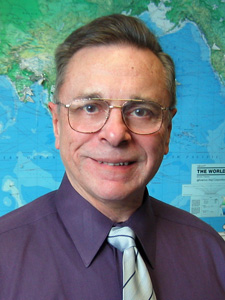 Arthur R. Butz was born and raised in New York City. He received Bachelor of Science and Master of Science degrees in Electrical Engineering from the Massachusetts Institute of Technology. In 1965 he received his doctorate in Control Sciences from the University of Minnesota. In 1966 he joined the faculty of Northwestern University (Evanston, Illinois), where he has served for years as Associate Professor of Electrical Engineering and Computer Sciences. Dr. Butz is the author of numerous technical papers. He is perhaps best known as the author of The Hoax of the Twentieth Century. For many years he was a member of the Editorial Advisory Committee of the IHR’s Journal of Historical Review.
Hellmut Diwald
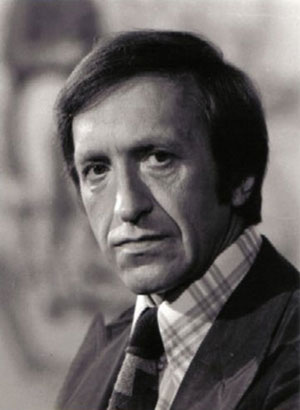
Hellmut Diwald (1924-1993) was a German historian. He was a Professor of Medieval and Modern History at the University of Erlangen- Nuremberg , 1965 to 1985. Perhaps his most important work is Geschichte der Deutschen.
Robert Faurisson
 Robert Faurisson is a French scholar and widely recognized specialist of text and document analysis. Born in January 1929, he was educated at the Paris Sorbonne, and served as associate professor at the University of Lyon in France from 1974 until 1990. After years of private research and study, Dr. Faurisson first made public his skeptical views about the Holocaust extermination story in articles published in 1978 in the French daily Le Monde. For years has been a leading European Holocaust revisionist scholar. His writings on this issue have appeared in several books and numerous articles.
Louis FitzGibbon
Louis FitzGibbon (1925-2003) was a British scholar and humanitarian. For years he was active in publicizing the 1940 killing of thousands of captured Polish officers by the Soviet secret police. He wrote several books on this issue. Although the facts about the massacre are now well established, during the 1970s his efforts on behalf of justice and historical truth were considered controversial because many people still embraced the World War II claim by the Allied powers that the gruesome wartime killings had been carried out by German authorities. Fluent in the Polish language, he was highly regarded by expatriate Poles in both Britain and the US. In Sept. 1979 he addressed the first “International Revisionist Conference,” organized in southern California by the Institute for Historical Review. His address on the Katyn massacre was published in the premier, Spring 1980 issue of the IHR’s Journal of Historical Review.
Georg Franz-Willing
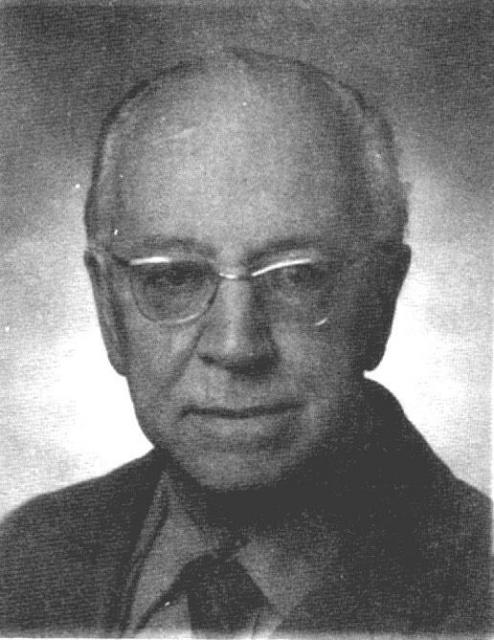 Georg Franz-Willing (born in 1915) was a German historian. He graduated from the Humanistic Gymnasium in Rosenheim, Bavaria, in 1935. He studied history, geography, anthropology, philosophy, and law at the University of Munich, earning his doctorate under the renowned historian Karl Alexander von Müller. From 1939 to 1945 he served in the German Army. After the war he taught history at the naval academy of the Bundeswehr in Flensburg, and was associated with a number of scholarly institutes. Dr. Franz-Willing was the author of numerous books and articles on modern history, including Die Reichskanzlei 1933-1945 and Der Zweite Weltkrieg: Ursachen und Anlass, as well as works on Habsburg Austria, modern China, and the American Civil War. His scholarly book on the National Socialist movement, Die Hitlerbewegung, was praised by the German weekly Der Spiegel as well grounded in the facts, and encyclopedic in scope. For years he was associated with and supportive of the Institute for Historical Review.
Russ Granata
Russ Granata (1923-2004) was an American educator, writer and translator. He was a six-times decorated US Navy veteran of World War Two. He was a graduate of the University of California (B.A.) and the University of Southern California (M.A.), specializing in European history and literature. He taught European history, literature and German for 33 years in southern California public schools. For years he worked closely with Italian revisionist scholar Carlo Mattogno, translating his writings into English. He served as Mattogno’s translator when addressing conferences of the Institute for Historical Review. Granata was also a contributor to the IHR’s Journal of Historical Review.
David Irving
 David Irving is a prominent and controversial British historian. His first work, The Destruction of Dresden, was published in 1963, when he was 25 years old. This was followed by many other books, including The Mare’s Nest: The Secret Weapons of the Third Reich, published in 1964, The Rise and Fall of the Luftwaffe, The German Atomic Bomb, The War Between the Generals and The Trail of the Fox, a best-selling biography of Field Marshall Erwin Rommel. Perhaps his most important book is Hitler’s War, which has gone through numerous editions. Several of his books have been best-sellers. Several have also appeared in various languages, or have been serialized in prominent periodicals.
Samuel E. Konkin, Jr.
Samuel E. Konkin, Jr. (1947-2004) was editor of The New Libertarian, organ of the “Movement of the Libertarian Left.” He received a B.Sc. degree in Chemistry from the University of Alberta and a M.A. in Economics from New York University.
Fred A. Leuchter, Jr.
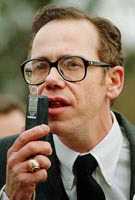 Frederick “Fred” A. Leuchter, Jr., is a court qualified expert on execution technology. For years he was the foremost expert on the design and fabrication of hardware, including homicidal gas chambers, used to execute convicted criminals in the United States. After receiving a Bachelor’s degree (in history) from Boston University in 1964, he did postgraduate work at the Harvard Smithsonian Astrophysical Observatory. He holds patents on the design of sextants, surveying instruments and optical encoding equipment. His 1988 forensic investigation of alleged mass killing gas chambers at Auschwitz, published and widely known as the “Leuchter Report,” and his testimony in defense of Holocaust skeptic Ernst Zündel during the “Holocaust trial” in Toronto in 1988, brought worldwide notoriety. Jewish groups quickly launched furious efforts to disparage him and discredit his findings. Leuchter was the subject of a maliciously critical documentary film by Errol Morris, “Mr. Death: The Rise and Fall of Fred A. Leuchter, Jr,” released in 1999.
Walter Lüftl
Walter Lüftl is a prominent Austrian engineer. Born in 1933, he was for years a court-recognized expert, and headed a major engineering firm in Vienna. From 1990 to March 1992, he served as president of Austria’s 4,000-member association of professional engineers (Bundesingenieurkammer).
James J. Martin
 James J. Martin (1916-2004) was an American historian. He received his Ph.D. in History from the University of Michigan in 1949. He was the author of Men Against the State, American Liberalism and World Politics 1931-1941, Revisionist Viewpoints, The Saga of Hog Island, and The Man Who Invented ‘Genocide’. His long teaching career included posts at Northern Illinois University (DeKalb), San Francisco State College, Deep Springs College, and Rampart College.
David McCalden

David McCalden (1951-1990) served as the first director of the Institute for Historical Review, founded in December 1978. In 1980 and early 1981 he was editor – under the pen name “Lewis Brandon” — of the IHR’s Journal of Historical Review. He left the IHR in April 1981.
L. A. Rollins
L. A. Rollins is an author and researcher who for years lived in Los Angeles. He received his B.A. degree in Philosophy from California State College, Los Angeles. He is the author of The Myth of Natural Rights, and has contributed to such periodicals as Reason, Critique, The Personalist, The New Libertarian, and Books for Libertarians.
Walter N. Sanning
Walter N. Sanning (a pen name) is the author of The Dissolution of Eastern European Jewry. For a number of years he taught international business, finance, and economics at a leading university on the West Coast of the US. He later went into private industry.
Howard F. Stein
Howard F. Stein has been tenured professor with the Department of Family Medicine at the University of Oklahoma Health Sciences Center, Oklahoma City. He has also been an Associate Professor of Medical-Psychiatric Anthropology with the Department of Community Medicine at the University of Oklahoma. From the University of Pittsburgh he received a B.A. in historical musicology (1967), and a Ph.D. in anthropology (1972). Dr. Stein is the author of dozens of scholarly, clinical and research papers. He has served as editor and book review editor of The Journal of Psychoanalytic Anthropology. He is the author of several published books, including The Psychodymanics of Medical Practice and American Medicine as Culture.
Keith Stimely
Keith Stimely (1957-1992) joined the editorial staff of the IHR’s Journal of Historical Review in June 1982, and served as its chief editor from February 1983 until February 1985. He studied at San Jose State University (California) and the University of Oregon, from where he graduated in 1980 with a bachelor’s degree in history. He then joined the US Army, serving as a reserve officer.
Serge Thion
Serge Thion is a French scholar who has devoted many years to study, analysis and writing on social, economic and political issues, particularly in agrarian societies. Born in 1942, his research has taken him to many countries in the Middle East, northern, eastern and southern Africa, Southeast Asia, and the South Pacific. After seven years of studies in sociology, anthropology, history and linguistics at the Paris Sorbonne, he received a doctorate in sociology from that school in 1967. His doctoral dissertation on the South African political system was published in 1969. Between 1967 and 1970 he taught in Vietnam and Cambodia. From 1971 until 1993 he was a research fellow with the National Center for Scientific Research (CNRS) in Paris, with special emphasis on the history of land problems and land reform in Vietnam and Cambodia, as well as political history and war and revolution in Rhodesia and Mozambique, and the history of statecraft in Southeast Asia. Dr. Thion is the author of numerous scholarly articles, which have appeared in academic periodicals in the US, France, Germany and other countries. He is also the author of several books, including Vérité historique ou vérité politique? (in collaboration with Robert Faurisson), Une Allumette sur la banquise: Ecrits de combat, and (in English, 1993) Watching Cambodia.
H. Keith Thompson
Harold Keith Thompson, (1922-2002) was a New York City corporate executive, literary agent and public relations executive. In 1941, the age of 19, he was recruited as an agent for German intelligence (Sicherheitsdienst). In June 1942 he enlisted in the US Naval Reserve. He studied at Drew University in Madison, New Jersey and transferred to Naval ROTC at Yale University in 1944. Two years later he was commissioned as Ensign with a bachelor’s degree in history. From December 1946 thru April 1947, he served as a communications officer aboard the USS Mt. Olympus, flagship of the Byrd Antarctic Expedition. For many years he was vice president, office manager , and then chief executive of Cooper Forms. In the 1950s he ran a public relations firm and literary agency in Manhattan. Thompson was editor of the book Dönitz at Nuremberg: A Re-Appraisal. He was also recognized as a leading American expert on the Nuremberg war crimes trials.
Mark Weber
Mark Weber is an American author, historian and lecturer. He was born and raised in Portland, Oregon. He studied history at the University of Illinois (Chicago), the University of Munich (Germany), and Portland State University, from where he received a bachelor’s degree in history (with high honors). He then did graduate work in history at Indiana University (Bloomington), where he served as a history instructor, and received a master’s degree in European history in 1977. In March 1988, he testified for five days in Toronto District Court as a recognized expert witness on Germany’s wartime Jewish policy and the Holocaust issue. He is the author of many dozens of articles, reviews, and essays on historical, political, and social issues. For eight years he was editor of the IHR’s Journal of Historical Review. Since 1995 he has been director of the Institute for Historical Review.